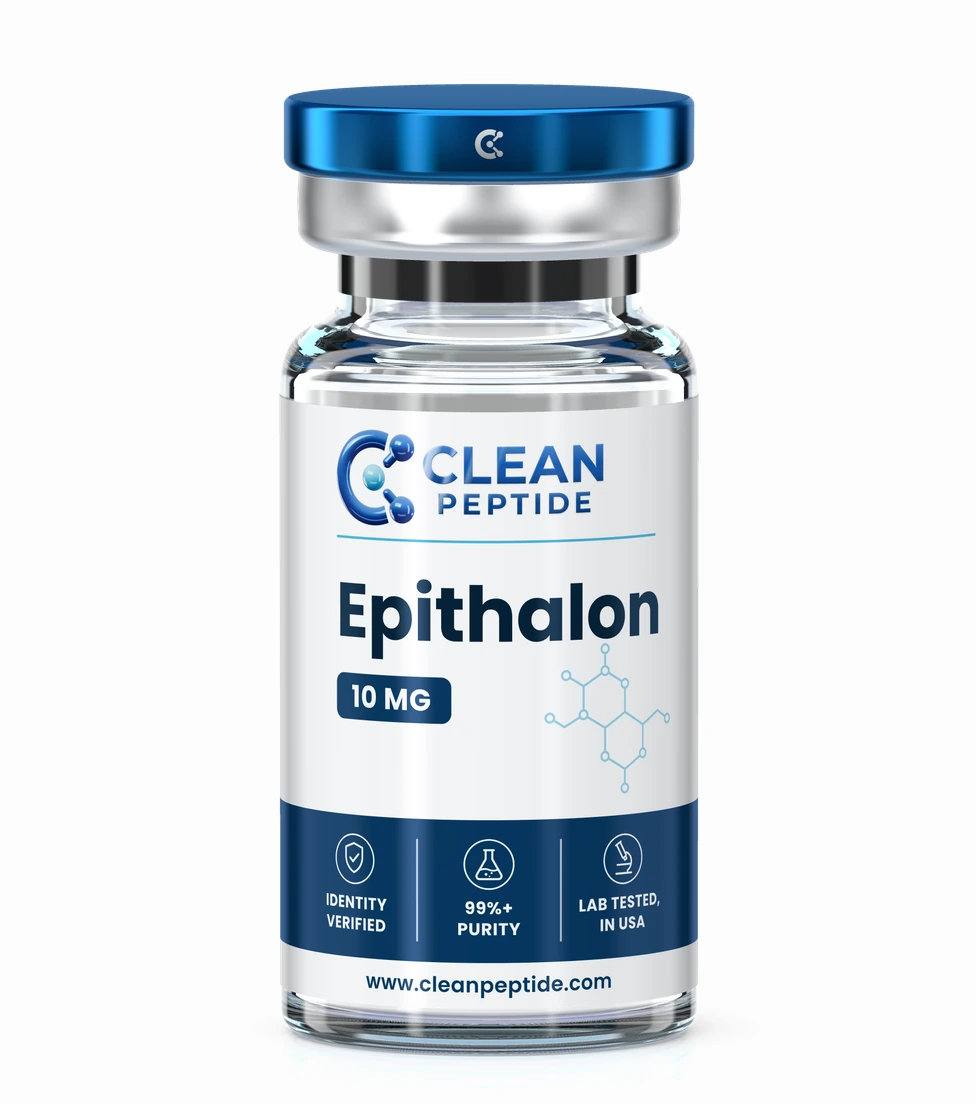


Epithalon Epitalon · AEDG peptide
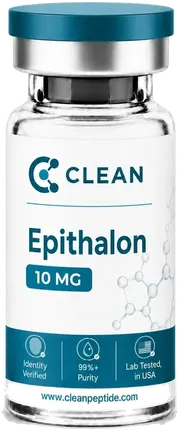
Epithalon (also spelled Epitalon) is a synthetic tetrapeptide, Ala-Glu-Asp-Gly (AEDG), designed in St Petersburg from the amino-acid composition of a pineal-gland extract. This epitalon peptide comes as a 10 mg lyophilised vial with a lot certificate for purity and content.
- Order within 17h 13m · ships TueCutoff 3:00 PM ET (12:00 PM PT)
- Arrives Thu, Oct 29 – Tue, Nov 3Free standard shipping on orders over $100
- Free shipment protectionLost, stolen, or damaged? We replace it, on us.
- Overnight and 2-day optionsPick your speed at checkout
- We acceptSecure 256-bit checkout
Verified test results
Every batch, independently verified.
Each batch is analyzed by an independent third-party laboratory before it ships. This is the released report for the size selected above, exactly as the lab issued it.
Certificate of analysis
99.62%
Purity by HPLC
- Lot
- 20260615
- Tested
- Jul 1, 2026
- Labeled
- 10mg
- Measured
- 10.44mg
Full QC panel
3 reportedIdentity
Quantity
spec 10 mg
Purity
spec >98%
What is Epithalon?
Epithalon was created by Vladimir Khavinson’s group at the St Petersburg Institute of Bioregulation and Gerontology. The group had studied epithalamin, a polypeptide extract of bovine pineal gland, and designed a four-residue peptide from that extract’s amino-acid composition. At four residues and 390 g/mol it is among the smallest peptides in research use. Epithalon and Epitalon are two spellings of the same molecule; epithalamin is the original extract, a different substance, and FDA treats the two as distinct.
No receptor has been identified for it. The originating group reports that it binds DNA and histones, and its best-known findings are telomerase expression in cultured human cells and changes in melatonin rhythms in animals. Most of the literature comes from that one group: of 122 PubMed records on epitalon in October 2026, 81 list Khavinson or his long-time collaborator Vladimir Anisimov as an author. FDA makes the same point in its 2026 review.
Epithalon identity
| Names | Epithalon, Epitalon, Epithalone, AEDG peptide, Ala-Glu-Asp-Gly |
|---|---|
| Sequence | AEDG (H-Ala-Glu-Asp-Gly-OH) |
| Structure | Linear tetrapeptide, all L (glycine is achiral), free termini |
| Molecular formula | C14H22N4O9 (free base) |
| Molecular weight | 390.35 g/mol (free base); 450.40 g/mol as the acetate |
| CAS number | 307297-39-8 (free base); 307297-40-1 (acetate) |
| PubChem CID | 219042 |
| Not the same as | Epithalamin, the bovine pineal polypeptide extract |
| This product | 10 mg, lyophilised powder |
Sources: PubChem, the FDA substance registry (GSRS UNII O65P17785G) and FDA’s July 2026 briefing document on epitalon.
Certificate for the current lot
The current lot’s certificate is a purity and assay report: HPLC purity against a specification of more than 98%, measured content against the 10 mg label, and identity:
| Size | Lot | Analysed | HPLC purity | Measured content | Identity |
|---|---|---|---|---|---|
| 10mg | 1 Jul 2026 | 99.618% | 10.44 mg | Epithalon |
Transcribed from the certificate issued for each size on sale today. Open the signed certificate for any size under Verified test results above. Every Epithalon COA, lot by lot
Epithalon price
Price per vial and per milligram, read live from the store:
| Size | List price | Price today | Per mg | Availability |
|---|---|---|---|---|
| 10mg | $42.00 | $4.20 | In stock |
Read from the store when this page loads, the same prices the Epithalon product page shows.
Published research on Epithalon
- Telomerase in human fibroblasts (2003, 2004). In telomerase-negative human fetal fibroblasts, the originating group reported expression of the telomerase catalytic subunit, telomerase activity and telomere elongation, and in serially passaged cells about ten additional divisions. Epithalon peptide induces telomerase activity and telomere elongation in human somatic cells. Khavinson VKh, et al. Bulletin of Experimental Biology and Medicine, 2003; Khavinson VKh, et al., 2004.
- Independent telomere study (2025). A Brunel University London group reported dose-dependent telomere lengthening with raised hTERT and telomerase activity in normal human cells, and lengthening through a different mechanism (ALT) in two breast-cancer cell lines. Epitalon increases telomere length in human cell lines through telomerase upregulation or ALT activity. Al-Dulaimi S, et al. Biogerontology, 2025.
- Lifespan studies in mice and flies (2000–2003). The group measured survival and spontaneous tumour incidence in two mouse strains and lifespan in fruit flies; the results differed by strain, with maximum but not mean lifespan changing in one of the mouse strains. Anisimov VN, et al., 2001; Anisimov VN, et al., 2003; Khavinson VK, et al., 2000.
- Melatonin: mixed results (2001, 2003). In old rhesus monkeys the peptide raised evening melatonin, while perifused pineal glands from young and old rats showed no melatonin response at the concentrations tested, in a study the originating group co-authored. Goncharova ND, et al., 2001; Effect of a synthetic pineal tetrapeptide (Ala-Glu-Asp-GLy) on melatonin secretion by the pineal gland of young and old rats. Djeridane Y, et al. Journal of Endocrinological Investigation, 2003.
- Mouse oocytes in culture (2022). An independent group studied reactive oxygen species, spindle defects and apoptosis in post-ovulatory mouse oocytes cultured with the peptide. Yue X, et al. Aging, 2022.
- Review (2026). A narrative review from US academic authors that keeps epitalon and epithalamin evidence separate. Epitalon and Epithalamin: A Narrative Review of Mechanistic, Preclinical, and Clinical Evidence. Jain A, et al. International Journal of Molecular Sciences, 2026.
FDA’s 2026 review found no pharmacokinetic studies and no clinical safety studies of epitalon.
Regulatory status
Epithalon is not an approved drug anywhere FDA checked, including the US, the EU and the UK. FDA placed it in its 503A compounding category 2 (substances that may present significant safety risks) on 29 September 2023 and moved it to nominated-but-withdrawn in April 2026; at the July 2026 Pharmacy Compounding Advisory Committee meeting FDA proposed not adding either the free base or the acetate to the compounding bulks list. An FDA orphan designation for retinitis pigmentosa, granted in 2010, was revoked in 2016. FDA compounding safety-risk list; FDA briefing document, July 2026. Clean Peptide’s Epithalon is a laboratory reference material only, not for human or veterinary use.
Related research
- SS-31 and MOTS-c, mitochondrial peptides with their own certificates.
- NAD+ in cellular-ageing research.
- Peptide testing: what a purity and assay report shows, and what a full panel adds.
- All mitochondrial and longevity peptides.
What is on file, and how it is handled
Every figure below is transcribed from the paperwork for this compound.
Material
- Compound
- Epithalon
- Class
- Synthetic tetrapeptide (pineal peptide analogue)
- Form
- Lyophilised powder
- Sizes
- 10mg
- Sequence
- AEDG (H-Ala-Glu-Asp-Gly-OH)
- Formula
- C14H22N4O9
- CAS
- 307297-39-8
- Mol. weight
- 390.35 g/mol
- Residues
- 4
Verification
- Identity
- Confirmed on the certificate of analysis
- Purity
- ≥ 99.618% by HPLCSee certificate
- Batch
- 20260615See certificate
- Documentation
- Per-batch certificate of analysis
Handling
- Storage
- Store at −20 °C, protected from light
- Intended use
- In-vitro laboratory research only
QuestionsEpithalon: frequently asked
What is Epithalon?+
Epithalon, also spelled Epitalon, is the synthetic tetrapeptide Ala-Glu-Asp-Gly (AEDG). Vladimir Khavinson’s group in St Petersburg designed it from the amino-acid composition of epithalamin, a bovine pineal-gland extract.
Is Epitalon the same as Epithalon?+
Yes. Epitalon and Epithalon are two spellings of the same peptide, AEDG. Epithalamin is different: it is the original pineal polypeptide extract, and FDA treats it as a separate substance.
What is the Epithalon molecular weight?+
390.35 g/mol for the free base, C14H22N4O9 (CAS 307297-39-8, PubChem CID 219042). The acetate salt is 450.40 g/mol, CAS 307297-40-1.
Who has studied Epithalon?+
Mostly its originators: 81 of 122 PubMed records on epitalon list Khavinson or Anisimov as an author. Independent work includes a 2025 Brunel University London telomere study in human cell lines and a 2022 study in mouse oocytes.
Is Epithalon FDA-approved?+
No. FDA placed it in its 503A category 2 in September 2023 and in July 2026 proposed not adding it to the compounding bulks list. Its 2010 orphan designation for retinitis pigmentosa was revoked in 2016.
What does the Epithalon certificate show?+
The current lot’s certificate, listed on this page, is a purity and assay report: HPLC purity against a specification of more than 98%, measured content against the 10 mg label, and identity.
Related products
-
Research use only−30%
 Longevity & Mitochondrial Peptides
Thymosin Alpha-1
Original price was: $234.00.$163.80Current price is: $163.80.Learn more about Thymosin Alpha-1 -
Research use only−30%
 Longevity & Mitochondrial Peptides
SS-31
Original price was: $92.55.$64.79Current price is: $64.79.Learn more about SS-31 -
Research use only−30%
 Longevity & Mitochondrial Peptides
MOTS-C
Original price was: $72.00.$50.40Current price is: $50.40.Learn more about MOTS-C -
Research use only−30%
 Longevity & Mitochondrial Peptides
PNC-27
Original price was: $79.99.$55.99Current price is: $55.99.Learn more about PNC-27