Products on this site are sold strictly for laboratory and research use only — not for human or veterinary consumption. You must be 21 or older to enter.
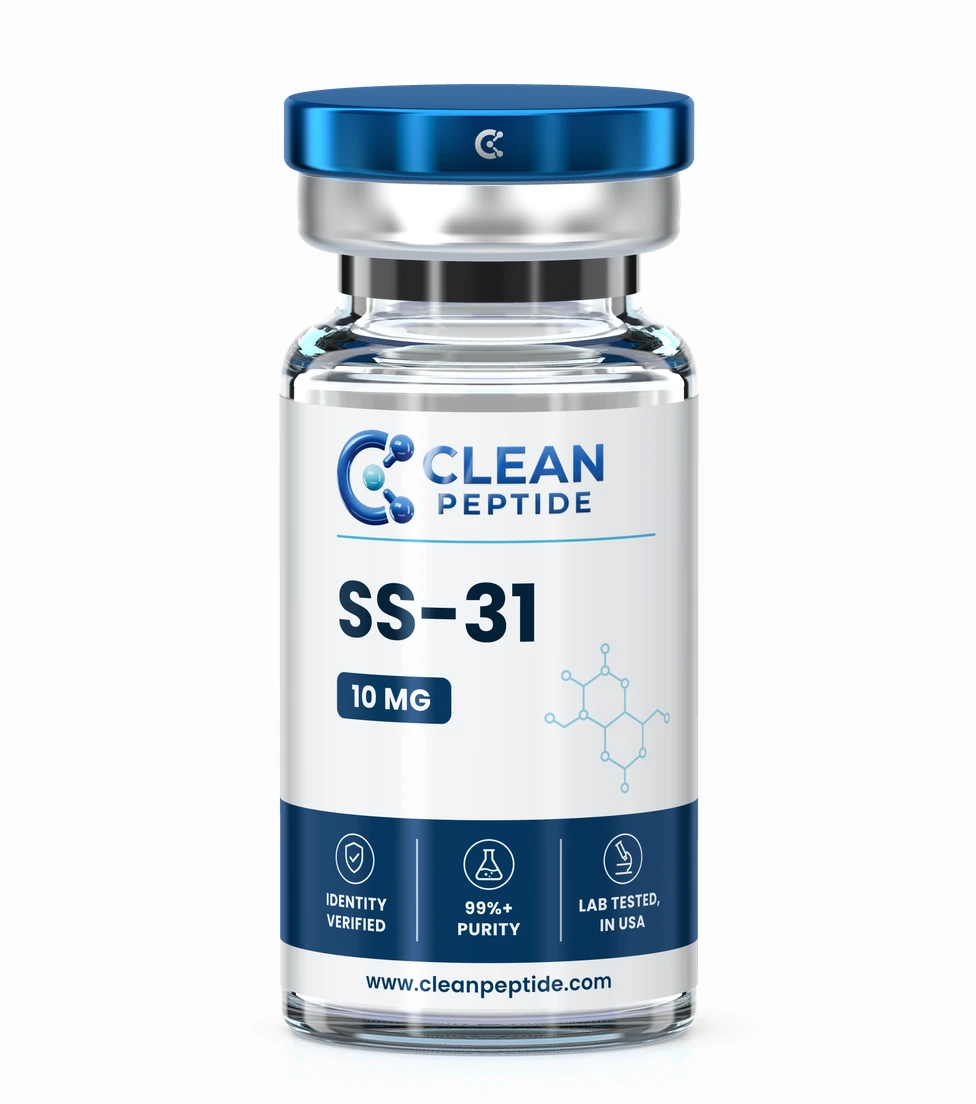
SS-31 (elamipretide) is a synthetic tetrapeptide, D-Arg-Dmt-Lys-Phe-NH2, that binds cardiolipin in the inner mitochondrial membrane. These SS-31 research vials hold 10 mg or 50 mg of lyophilised peptide, and each size has its own ILS Laboratories certificate for HPLC purity, net content and identity.
Order within 17h 12m · ships TueCutoff 3:00 PM ET (12:00 PM PT)
Arrives Thu, Oct 29 – Tue, Nov 3Free standard shipping on orders over $100
Free shipment protectionLost, stolen, or damaged? We replace it, on us.
Overnight and 2-day optionsPick your speed at checkout
We acceptSecure 256-bit checkoutVISAAMEX
Certificate of analysisSS-31 · 10mg · BATCH ACE-7909990
Verified test results
Every batch, independently verified.
Each batch is analyzed by an ISO/IEC 17025 accredited third-party laboratory before it ships. This is the released report for the size selected above, exactly as the lab signed it.
Open any size’s signed certificate. Your order ships with the report for the size you buy.
SS-31 10mg
Selected
LOT ACE-7909990
99.90%
HPLC purity · meets spec
Labeled
10mg
Measured
10.72mg
Identity
SS-31
Heavy metals
Not Detected
Sterility
No Growth
Endotoxin
0.101 EU/mL
Tested
Sep 3, 2026
5 assays passed · ILS Laboratories, ISO/IEC 17025 accredited
SS-31 50mg
Selected
LOT ACE-2817021
99.90%
HPLC purity · meets spec
Labeled
50mg
Measured
51.82mg
Identity
SS-31
Heavy metals
Not Detected
Sterility
No Growth
Endotoxin
0.101 EU/mL
Tested
Sep 3, 2026
5 assays passed · ILS Laboratories, ISO/IEC 17025 accredited
What is SS-31?
SS-31 is the lead compound of the Szeto-Schiller (SS) peptides, designed by Hazel Szeto at Weill Cornell and Peter Schiller in Montreal. It is only four residues long but unusual in two of them: the arginine is the D-isomer, and the second residue is 2′,6′-dimethyltyrosine (Dmt), a non-natural amino acid. The pattern of alternating aromatic and positively charged residues lets it cross cell membranes and concentrate in mitochondria; the 2004 paper describing the series reported roughly 1,000-fold concentration in the inner mitochondrial membrane.
Its target is cardiolipin, the negatively charged phospholipid found almost only in the inner mitochondrial membrane, where it shapes the cristae. In 2013 SS-31 was reported to bind cardiolipin with high affinity and to inhibit the cytochrome c peroxidase activity that oxidises it. Under the name elamipretide, it was developed clinically by Stealth BioTherapeutics and became the first FDA-approved drug in its class in 2025. It is sometimes grouped with MOTS-c, a very different molecule: a natural 16-residue peptide encoded in mitochondrial DNA.
Each size is filled from its own lot and analysed separately by ILS Laboratories in San Diego, which states ISO/IEC 17025 accreditation for activities within its published scope. Both certificates are full QC panels: HPLC purity, net peptide content and identity, plus endotoxin, sterility, heavy metals by ICP-MS and a fentanyl screen:
Transcribed from the certificate issued for each size on sale today. Open the signed certificate for any size under Verified test results above. Every SS-31 COA, lot by lot
Aged mouse muscle (2013). One hour after a single dose, spectroscopy measures of mitochondrial ATP production and coupling in the muscle of 27-month-old mice moved toward those of young mice; young mice showed no change. Siegel MP, et al. Aging Cell, 2013.
Dogs with heart failure (2016). Three months of elamipretide in a microembolisation model, with left-ventricular function and cardiomyocyte mitochondrial respiration as end points. Sabbah HN, et al. Circulation: Heart Failure, 2016.
A phase 3 trial in dry AMD (ReNEW, NCT06373731) and the post-approval confirmatory trial in Barth syndrome (NCT07531251) were under way in October 2026.
Regulatory status
Elamipretide is an FDA-approved drug for one indication. On 19 September 2025 FDA granted accelerated approval to Forzinity (Stealth BioTherapeutics) to improve muscle strength in adult and paediatric patients with Barth syndrome weighing at least 30 kg; continued approval depends on a confirmatory trial. All other uses, including mitochondrial myopathy, heart failure and macular degeneration, remain investigational. Forzinity prescribing information, DailyMed; FDA approval letter, NDA 215244. Clean Peptide’s SS-31 is a laboratory reference material, not Stealth’s product, and is not for human or veterinary use.
Related research
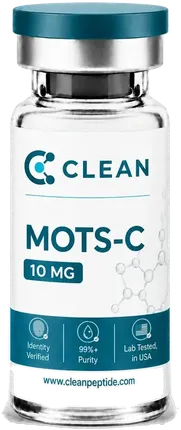
MOTS-c, the mitochondrial-DNA-encoded peptide, with its own certificates.
SS-31 (elamipretide) is a synthetic tetrapeptide, D-Arg-Dmt-Lys-Phe-NH2, from the Szeto-Schiller peptide series. It concentrates in mitochondria and binds cardiolipin, a phospholipid of the inner mitochondrial membrane.
Is SS-31 the same as elamipretide?+
Yes. Elamipretide is the international non-proprietary name of SS-31; it was also developed under the codes MTP-131 and Bendavia. The FDA-approved drug Forzinity contains elamipretide as its hydrochloride salt.
Is SS-31 FDA-approved?+
Elamipretide received FDA accelerated approval on 19 September 2025, as Forzinity, for one indication: improving muscle strength in patients with Barth syndrome weighing at least 30 kg. Other uses are investigational. Clean Peptide’s SS-31 is a laboratory reference material, not that product.
What is the SS-31 molecular weight?+
639.8 g/mol for the free base, C32H49N9O5 (CAS 736992-21-5, PubChem CID 11764719). The approved drug’s trihydrochloride salt is 749.2 g/mol.
What is the difference between SS-31 and MOTS-c?+
SS-31 is a synthetic 4-residue peptide with a D-amino acid and a non-natural dimethyltyrosine that binds cardiolipin. MOTS-c is a natural 16-residue peptide encoded in the mitochondrial 12S rRNA gene, studied for its effects through AMPK.
What do the SS-31 certificates show?+
Each size has its own ILS Laboratories full QC panel, listed on this page with lot number, test date, HPLC purity, net peptide content and identity; the certificates also report endotoxin, sterility, heavy metals and a fentanyl screen.