Products on this site are sold strictly for laboratory and research use only — not for human or veterinary consumption. You must be 21 or older to enter.
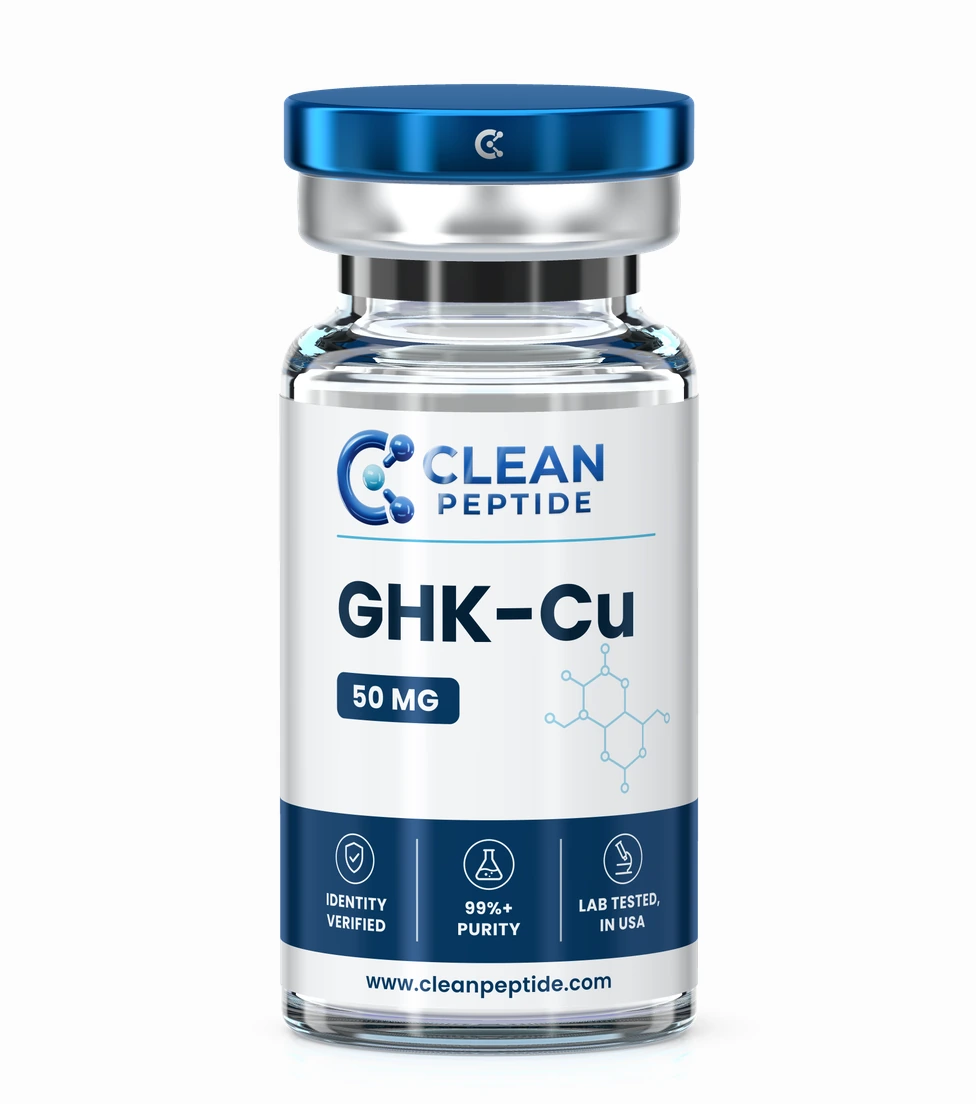
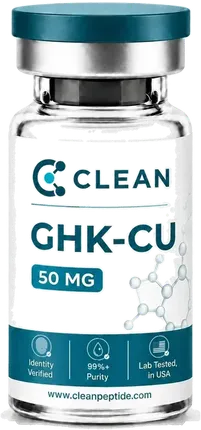
GHK-Cu (copper tripeptide-1) is the copper(II) complex of glycyl-L-histidyl-L-lysine, a tripeptide first found in human plasma. This GHK-Cu peptide comes as 50 mg and 100 mg lyophilised vials, each size with its own ILS Laboratories certificate.
Order within 17h 13m · ships TueCutoff 3:00 PM ET (12:00 PM PT)
Arrives Thu, Oct 29 – Tue, Nov 3Free standard shipping on orders over $100
Free shipment protectionLost, stolen, or damaged? We replace it, on us.
Overnight and 2-day optionsPick your speed at checkout
We acceptSecure 256-bit checkoutVISAAMEX
Certificate of analysisGHK-Cu · 50mg · BATCH ACE-0594510
Verified test results
Every batch, independently verified.
Each batch is analyzed by an ISO/IEC 17025 accredited third-party laboratory before it ships. This is the released report for the size selected above, exactly as the lab signed it.
Open any size’s signed certificate. Your order ships with the report for the size you buy.
GHK-Cu 50mg
Selected
LOT ACE-0594510
99.83%
HPLC purity · meets spec
Labeled
50mg
Measured
53.61mg
Identity
Confirmed
Heavy metals
Not Detected
Sterility
No Growth
Endotoxin
NMT 0.05 EU/mL
Tested
Sep 10, 2026
5 assays passed · ILS Laboratories, ISO/IEC 17025 accredited
GHK-Cu 100mg
Selected
LOT ACE-1584525
99.90%
HPLC purity · meets spec
Labeled
100mg
Measured
105.86mg
Identity
Confirmed
Heavy metals
Not Detected
Sterility
No Growth
Endotoxin
0.101 EU/mL
Tested
Sep 3, 2026
5 assays passed · ILS Laboratories, ISO/IEC 17025 accredited
What is GHK-Cu?
GHK is the tripeptide Gly-His-Lys. Loren Pickart reported it in human serum in 1973, and in 1980 showed that it co-purifies with copper and readily forms copper(II) complexes. The copper ion sits between the histidine imidazole nitrogen and the N-terminal amine, and it is the complex, GHK-Cu, rather than the bare peptide that most of the literature studies. The blue colour of a GHK-Cu solution comes from that bound copper.
The same Gly-His-Lys triplet occurs inside larger proteins, including the alpha-2 chain of type I collagen and SPARC, which is why early researchers suggested it could be released from collagen at sites of tissue damage. In cosmetics the complex is listed under the INCI name “copper tripeptide-1”; this product is a lyophilised research reference material, not a serum or cream.
Registries describe GHK-Cu with more than one copper stoichiometry: the FDA substance record (GSRS UNII 6BJQ43T1I9) is the 1:1 complex used above, while PubChem also holds a 2:1 record (C28H48CuN12O8) titled “GHK-Cu”. A 2026 review notes that published work often does not say which form it tested.
Certificates for the current lots
Each size is filled from its own lot and analysed separately by ILS Laboratories in San Diego, which states ISO/IEC 17025 accreditation for activities within its published scope:
Transcribed from the certificate issued for each size on sale today. Open the signed certificate for any size under Verified test results above. Every GHK-Cu COA, lot by lot
Gene-expression signature (2012). Using lung tissue from smokers with COPD and the Connectivity Map, researchers identified GHK as a compound predicted to reverse an emphysema-related gene signature, and in fibroblasts from COPD lungs it restored collagen gel contraction. A gene expression signature of emphysema-related lung destruction and its reversal by the tripeptide GHK. Campbell JD, et al. Genome Medicine, 2012.
Topical human trials (1992–2006). Randomised trials of topical GHK-Cu products are few and mixed: a positive result in diabetic neuropathic ulcers, no difference from placebo in venous ulcers, and no objective difference in a 13-patient study after laser resurfacing. Mulder GD, et al., 1994; Bishop JB, et al., 1992; Miller TR, et al., 2006.
GHK-Cu is not an approved drug. FDA placed “GHK-Cu (for injectable routes of administration)” in its compounding safety-risk category in 2023; the page now lists it among nominated-but-withdrawn substances. GHK-Cu for non-injectable routes is under FDA evaluation for the compounding list. As copper tripeptide-1 it is used as a cosmetic ingredient. FDA compounding safety-risk list. Clean Peptide’s GHK-Cu is a laboratory reference material only.
Related research
KLOW: GHK-Cu blended with BPC-157, TB-500 and KPV in one vial.
GLOW peptide blend: what is in GHK-Cu / BPC-157 / TB-500 blends and how they compare with KLOW.
GHK-Cu is the copper(II) complex of the tripeptide glycyl-L-histidyl-L-lysine (Gly-His-Lys), first found in human plasma by Loren Pickart. Its cosmetic INCI name is copper tripeptide-1.
What is the GHK-Cu CAS number?+
CAS 89030-95-5 for GHK-Cu (copper tripeptide-1). The uncomplexed tripeptide GHK is CAS 49557-75-7.
What is the molecular weight of GHK-Cu?+
401.91 g/mol for the 1:1 complex C14H22CuN6O4, as in the FDA substance record. Uncomplexed GHK is 340.38 g/mol.
Is GHK the same as GHK-Cu?+
No. GHK is the bare tripeptide; GHK-Cu is GHK bound to a copper(II) ion. Most published research concerns the copper complex.
What sizes of GHK-Cu does Clean Peptide sell?+
50 mg and 100 mg lyophilised vials. Each size has its own lot and its own ILS Laboratories certificate on this page.
Is this GHK-Cu a skin serum?+
No. It is lyophilised GHK-Cu powder sold as a laboratory reference material, not a finished cosmetic product.