Third-party tested peptides should come with evidence you can inspect before buying. A supplier may print “99% pure” or “lab tested” on a product page, but those phrases do not explain who ran the test or whether it covers the current batch.
This guide shows you how to review a COA, match it to the vial, and understand what HPLC and mass spectrometry actually confirm.

What Does “Third-Party Tested Peptides” Actually Mean?
Third-party tested peptides have been analyzed separately from the manufacturer, peptide company, or supplier selling them. Strong independent testing identifies the sample, laboratory, methods, results, and lot.
“Third-party tested” describes who performed the analysis, not who selected the sample. The report covers the submitted material and named lot, not every vial in inventory.
First-Party Testing vs Third-Party Testing
- First-party testing occurs within the seller’s or manufacturer’s quality control system.
- Third-party testing moves analysis to an independent laboratory.
Both can contribute useful evidence. Internal batch testing guides release decisions, while independent verification adds an outside check for buyers.
“Lab Tested” Does Not Automatically Mean “Independently Tested”
“Lab tested” says laboratory testing happened, but not who performed it, which method was used, or which batch produced the result.
The same applies to “research grade,” “high purity,” and “99% pure.” Without documentation, these remain marketing claims rather than verifiable test results.
The 6 Things to Verify Before Buying Third-Party Tested Peptides
1. Is the Certificate of Analysis Available?
A Certificate of Analysis, or COA, records the sample, methods, and analytical results. FDA guidance calls for batch-specific certificates listing each test, acceptance limits, numerical results, and identifying details [1].
Check the peptide COA for:
- Compound name: Matches the product page and peptide substances sold
- Test date: Shows when the sample was examined
- Lot or batch identifier: Connects the report with specific vials
- Analytical results: Places each value beside its corresponding test
- Testing laboratory: Names the independent lab behind the report
- Testing methodology: States HPLC, mass spectrometry, or another method
2. Does the COA Match the Actual Lot Being Sold?
The report’s batch number should match the lot number on the product and vial. A genuine report from an older lot does not verify today’s inventory.
FDA guidance treats batch numbers as unique identifiers connecting analytical data with tested material [1]. Save the lot-specific COA, then compare it with the received label.
3. Was Peptide Purity Actually Measured?
Look for HPLC purity testing, not a percentage standing alone. High-performance liquid chromatography separates detectable components under defined conditions.
The chromatogram shows one main peak and smaller peaks. Area percentage describes the integrated signal, not everything inside the vial.
4. Was Peptide Identity Verified?
Identity verification asks whether evidence supports the claimed compound. Mass spectrometry measures mass-to-charge ratios, letting analysts compare observed and expected molecular mass.
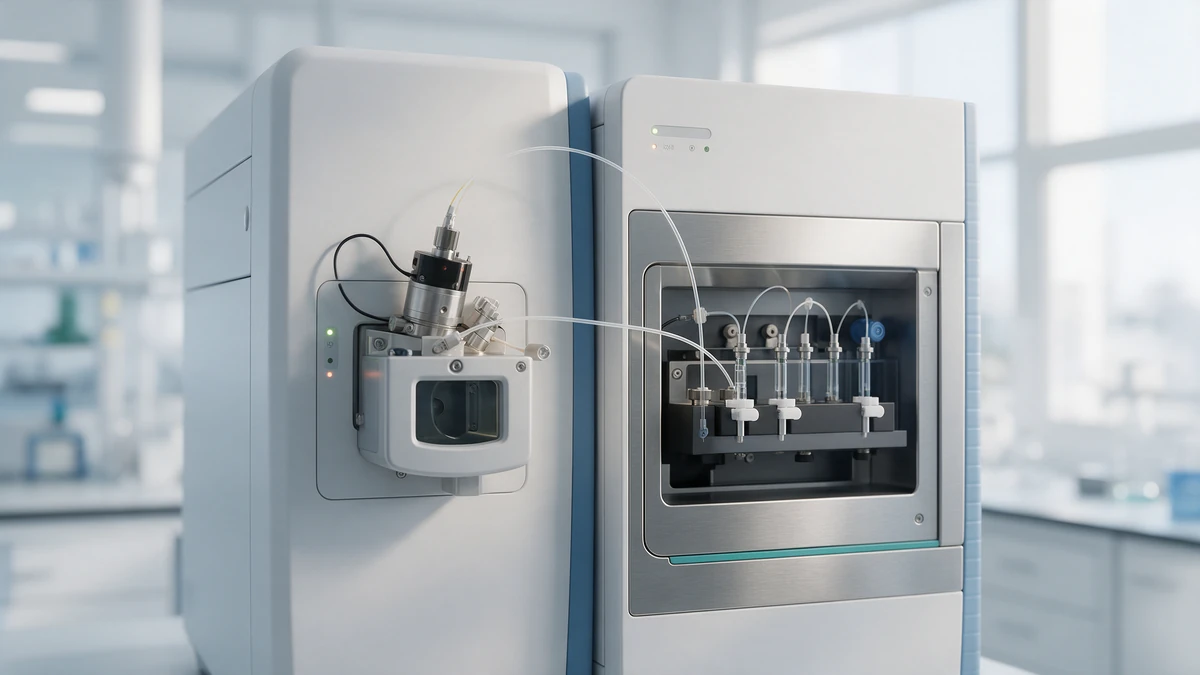
Identity can also be shown by an HPLC retention-time match against an authentic reference standard of the same peptide, run under the same conditions. That is a common identity test for research materials; mass spectrometry measures the mass directly and is more specific, and LC-MS/MS can add sequence-related fragments [4]. Either way, the certificate should say which method it used.
5. Can the Testing Laboratory Be Identified?
A traceable laboratory report should identify the facility and include a report, reference, or accession number.
Look for:
- Laboratory name and contact details
- Report number, QR code, or verification key
- Test date and sample description
- Independently verifiable result, when available
ISO/IEC 17025 covers laboratory competence, impartiality, and consistent operation [8]. When accreditation is claimed, verify the lab and its testing scope.
6. Is Testing Performed Batch by Batch?
Batch-specific testing connects quality assurance with the raw materials and manufacturing run behind your vials. Impurity profiles can shift after production changes [1].
One historical sample cannot establish batch consistency forever. Published testing for each lot provides stronger traceability.
HPLC vs Mass Spectrometry: What Each Test Tells You
| Test | Primary purpose | What buyers should verify |
|---|---|---|
| HPLC with UV detection | Separates detected components and reports the main peak’s relative area |
HPLC purity result, method, chromatogram, and labeled peaks |
| MS or LC-MS | Compares observed mass evidence with the compound’s expected molecular mass |
Expected mass, observed result, ion data, and identity conclusion |
| Quantitative assay | Measures peptide content or amount using a calibrated method |
Units, reference standard, result, and stated vial amount |
| Sterility or endotoxin testing | Checks viable microbes or bacterial endotoxins through separate methods |
Named method, limits, units, and pass or reported result |
Why Purity and Identity Should Not Be Treated as the Same Thing
- Purity describes the profile produced under one method.
- Identity asks whether the material is the target peptide claimed by the vendor.
FDA guidance says one retention time is insufficient for identity and accepts combined approaches such as HPLC/MS [3]. A clean peak alone cannot complete identity confirmation.
How to Read a Peptide Certificate of Analysis
Read the peptide COA from identification through results, rather than jumping directly to the largest percentage. Each line should match the current product.
Product and Peptide Name
Confirm the compound, form, and specification match the item sold. Similar names do not establish equivalent peptide protocols or materials.
Lot or Batch Number
Match the report identifier with the vial and listing. Different numbers mean the published testing belongs to another lot.
Test Date
Check when the sample was analyzed and whether that date fits the current batch. Recency cannot replace matching lot information.
Purity Result
Find the percentage and analytical method. HPLC purity is method-dependent, so note the chromatogram and integration details provided.
Identity Result
Look for the identity method and its result: a retention-time match against a named reference standard, or mass spectrometry comparing observed and expected molecular mass. A bare “pass” with no method provides less context than supporting values.
Testing Laboratory
Confirm the laboratory name, report number, signature, and verification route. Publicly accessible original records provide stronger verification.
Does “99% Pure” Mean a Peptide Is Fully Tested?
No. A 99% HPLC purity result only describes the main peak measured under that laboratory’s specific testing conditions. It does not mean that 99% of everything inside the vial is the target peptide.
Several important questions still require separate analytical testing:
- Molecular identity: A retention-time match against a reference standard, or mass spectrometry, checks whether the material is the expected peptide.
- Peptide content: A quantitative assay measures how much target peptide is actually present in the vial.
- Sterility: Sterility testing checks for viable microbial contamination.
- Bacterial endotoxins: Endotoxin testing looks for harmful bacterial components, even when living bacteria are absent.
- Heavy metals: Separate elemental testing checks for contaminants such as lead, arsenic, cadmium, and mercury.
- Biological activity: A suitable bioassay may be needed to determine whether the material produces the expected response.
One multi-laboratory oxytocin study compared HPLC assay, quantitative NMR, and amino acid analysis for measuring peptide content [5]. FDA guidance also treats sterility and bacterial endotoxin testing as separate quality checks because they measure different risks [7].
Red Flags When Evaluating “Third-Party Tested” Peptides
- No COA: A testing claim appears without supporting evidence.
- Generic COA: One document covers changing batches or several products.
- Anonymous laboratory: No facility can be contacted or checked.
- Unsupported purity: A percentage appears without a report or chromatogram.
- Mismatched details: The compound, quantity, date, or lot differs.
- No verification route: The report number or laboratory record cannot be traced.
Why Batch-Specific Testing Matters for Research
Manufacturing batches can vary, so one old sample cannot validate every later run. Lot-specific documentation improves batch testing records, reproducibility, and procurement confidence.
FDA guidance calls for suitable tests on each API batch and continued impurity-profile comparisons [1]. The traceability principle remains useful for research-grade peptides.
What to Look for in a Research Peptide Supplier Beyond Testing
Testing transparency belongs within a wider review of peptide suppliers and peptide companies. Look for:
- Clear specifications and visible lot identification
- Accessible COAs with defined methods
- Research-use positioning that excludes human use and human consumption
- Product-specific shipping and storage instructions
- Responsive support for documentation questions
For the complete vendor review, read our Where to Buy Research Peptides: 10 Checks guide.
Browse Third-Party Tested Research Peptides
Researchers should not have to order from a promise alone. At Clean Peptide, the certificate for every lot is published on its product page before you buy. Most of the catalogue is analysed by ILS Laboratories, whose full QC panels confirm identity by HPLC retention time against a reference standard and report HPLC purity, net peptide content, endotoxin, sterility, heavy metals and a fentanyl screen. Some lots carry shorter reports, and each product page says what its certificate covers.
The tables below are read live from those certificates, so they always show the lots on sale today. Match the lot number to your vial.
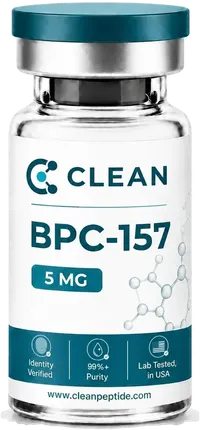
BPC-157
| Size | Lot | Laboratory | Analysed | HPLC purity | Measured content | Identity |
|---|---|---|---|---|---|---|
| 10mg | ILS Laboratories | 21 Sep 2026 | 99.56% | 10.64mg | Confirmed | |
| 20mg | Accurate Test Labs | 24 Aug 2026 | 99.8% | 20.99 mg/unit | Confirmed |
Transcribed from the certificate issued for each size on sale today. Open the BPC-157 certificates Every BPC-157 COA, lot by lot
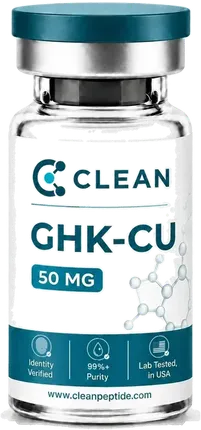
GHK-Cu
| Size | Lot | Laboratory | Analysed | HPLC purity | Measured content | Identity |
|---|---|---|---|---|---|---|
| 50mg | ILS Laboratories | 10 Sep 2026 | 99.83% | 53.61mg | Confirmed | |
| 100mg | ILS Laboratories | 3 Sep 2026 | 99.90% | 105.86mg | Confirmed |
Transcribed from the certificate issued for each size on sale today. Open the GHK-Cu certificates Every GHK-Cu COA, lot by lot
GLP-2 Tirz (tirzepatide)
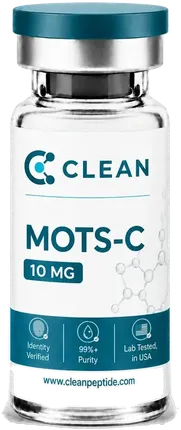
MOTS-c
| Size | Lot | Laboratory | Analysed | HPLC purity | Measured content | Identity |
|---|---|---|---|---|---|---|
| 10mg | ILS Laboratories | 3 Sep 2026 | 99.90% | 10.72mg | MOTS-C | |
| 40mg | ILS Laboratories | 9 Sep 2026 | 99.62% | 42.7 mg | Confirmed |
Transcribed from the certificate issued for each size on sale today. Open the MOTS-C certificates Every MOTS-C COA, lot by lot
Browse All Research Peptides
Research Sources
- Q7A Good Manufacturing Practice Guidance for Active Pharmaceutical Ingredients
FDA guidance covering API manufacturing, batch records, laboratory controls, release testing, storage, traceability, and Certificate of Analysis requirements. - Q2(R2) Validation of Analytical Procedures
FDA guidance describing validation principles for analytical methods, including specificity, accuracy, precision, range, detection limits, and representative analytical data. - Q6A Specifications: Test Procedures and Acceptance Criteria
FDA guidance covering identity, assay, impurity testing, acceptance criteria, chromatographic procedures, and combined methods such as HPLC with mass spectrometry. - Liquid Chromatography-High Resolution Mass Spectrometry for Peptide Drug Quality Control
Zeng K, et al. AAPS Journal, 2015. An FDA laboratory study assessing LC-HRMS with salmon calcitonin, bivalirudin, and exenatide for peptide identification and impurity measurement. - Survey of Peptide Quantification Methods and Their Reproducibility Comparison: A Case Study Using Oxytocin
A multi-laboratory study comparing HPLC assay, quantitative NMR, and amino acid analysis for measuring oxytocin content and inter-laboratory variation. - Multifactor Quality and Safety Analysis of Semaglutide Products Sold by Online Sellers Without a Prescription
A market surveillance and test-purchase study examining delivery fraud, labeling, peptide content, purity, sterility, and endotoxin contamination. - Pyrogen and Endotoxins Testing: Questions and Answers
FDA guidance explaining bacterial endotoxin testing, pyrogen testing, method selection, sampling, interference, acceptance limits, and laboratory investigation. - ISO/IEC 17025:2017, General Requirements for the Competence of Testing and Calibration Laboratories
The international standard defining requirements for testing-laboratory competence, impartiality, consistent operation, and reliable analytical results.