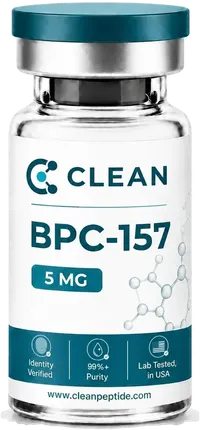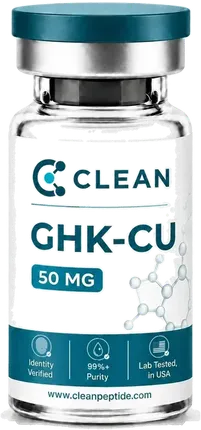
A single peptide gives researchers one defined compound. A peptide blend places two or more compounds in the same formulation. That small change affects concentration control, study design, result interpretation, and what the Certificate of Analysis must verify.

Peptide Blends vs Single Peptides at a Glance
Single peptides give tighter control over one variable. Blends fit studies where the combination itself is the variable, but they require more controls and more detailed testing.
| Single peptide | Peptide blend | |
|---|---|---|
| Composition | One defined peptide |
Two or more defined peptides |
| Concentration control | Each concentration can be changed alone |
Components rise or fall together |
| Result attribution | More direct |
Requires single-component controls |
| Ratio | Set by the researcher |
Usually fixed in the vial |
| Testing | One identity and purity profile |
Each component must be resolved and identified |
| Best fit | One compound or pathway |
A specific combination at a stated ratio |
What Is a Single Peptide?
A single peptide contains one intended compound with a defined amino-acid sequence. That makes it easier to isolate as a variable and compare with published research on the same molecule.
It also allows independent concentration changes. For example, GHK-Cu can be studied without changing a second peptide. The peptide COA should still identify the lot, purity, identity, and any content test performed.
What Is a Peptide Blend?
A peptide blend contains at least two peptides in one formulation. In many blends, the component split matters as much as the total. A 20 mg vial with 10 mg of peptide A and 10 mg of peptide B is 1:1 by mass. A vial with 5 mg of peptide A and 15 mg of peptide B is 1:3, so it is a different material.
Equal mass does not mean equal molecule count when the molecular weights differ. Researchers need each component’s amount and molecular weight to calculate its molar concentration.
Main Differences Between Peptide Blends and Single Peptides
Blends make a fixed combination convenient. Separate peptides provide more freedom to change and test each variable.
Research Control
A single peptide changes one material variable. With a two-part blend, both change together. A basic interaction study may need four conditions: control, peptide A, peptide B, and A plus B. Although written for investigational drugs, FDA combination guidance uses the same four-arm logic to separate each component’s contribution [1].
Result Interpretation
A blend result belongs to the mixture until controls show otherwise. Without single-component groups, the study cannot tell whether peptide A, peptide B, an additive response, or an interaction caused the effect.
Ratio Flexibility
Separate vials allow a lower amount of one component and a higher amount of another. A premixed blend keeps both in the same proportion. That may improve preparation consistency, but it prevents independent changes.
Analytical Complexity
Each component keeps its molecular identity, so a blend does not have one sequence or molecular weight. Testing must resolve the relevant peaks and identify the intended compounds. FDA guidance treats identity, assay, and impurities as separate questions [3][4].
Are Peptide Blends Better Than Single Peptides?
No. More components do not automatically create a stronger or better effect. The benefits of a blend are practical when the defined combination answers the research question.
A single peptide is cleaner when attribution, flexible concentrations, or comparison with a single-compound study matters most.
Can Peptide Blends Be Synergistic?
Potentially, but synergy must be measured against the separate components under the same conditions. In the Chou-Talalay model, a combination index below 1 means synergy, 1 means an additive effect, and above 1 means antagonism [2].
A larger response from a blend alone does not prove synergy.
Why Does the Ratio of a Peptide Blend Matter?
The ratio sets the amount of each component per sample. Two blends can share a 20 mg total yet create different research conditions.
With CJC combinations or TB-500 paired with BPC-157, review each component’s amount, not only the total shown on the vial.
Testing Peptide Blends vs Single Peptides
For a single peptide, look for:
- The compound name
- Lot number
- HPLC purity
- Identity result
- Batch-specific COA
For a peptide blend, include all of those checks plus:
- The name and amount of every component
- Evidence that the method can distinguish the components
- Identity support for each intended peptide
- Content or ratio data when reported
Peptide mixtures can contain coeluting compounds that ordinary HPLC does not fully resolve. This is one reason LC-MS is used for deeper characterization [5][8]. Quantity also needs a suitable assay or content test [6].

How to Choose Between a Peptide Blend and a Single Peptide
Choose a Single Peptide When:
- One compound is the main variable.
- Independent concentration control matters.
- The published study used that peptide alone.
- You want the clearest path from material to result.
Choose a Blend When:
- The combination is the research question.
- A fixed ratio fits the study design.
- Single-component control groups are available.
- One prepared formulation supports consistency across samples.
Peptide Blend vs Peptide Bundle
A blend combines several peptides in one vial. A bundle keeps them separate, so each can be measured and adjusted alone. Terms like “peptide stack” and “peptide therapy” are commonly used online. However, neither tells a lab whether the materials are premixed.
At CleanPeptide, we make that choice clear. Compare our BPC-157/TB-500 blend with separate BPC-157 and TB-500 research materials, or explore our CJC-1295 blend.
We publish batch-level documentation so you can review the composition, ratio, and testing evidence before choosing a material for your research.
Browse Peptide Blends and Single Research Standards →
FAQ
What Is the Difference Between a Peptide Blend and a Single Peptide?
A single peptide contains one defined compound. A blend places two or more peptides in the same formulation, usually at a fixed ratio. Singles offer tighter variable control, while blends support research on a defined combination.
Are Peptide Blends Better Than Single Peptides?
No. The better format depends on the research question. Singles make attribution easier, while blends may fit a study in which the combination itself is being tested.
Are Peptide Blends More Effective?
Not automatically. A blend may produce additive, synergistic, or antagonistic results. The specific peptides, ratio, model, and controls determine the finding.
Why Does Peptide Blend Ratio Matter?
The ratio determines how much of each compound enters the experiment. The same total mass can hide very different component amounts, and equal milligrams do not always mean equal molar amounts.
Is a Peptide Blend the Same as a Peptide Stack?
Not exactly. “Stack” is an informal term that can mean a premixed product or separate peptides used together. “Blend” specifically means multiple components in one formulation.
Is a Peptide Blend the Same as Buying Separate Peptides?
No. Separate products let researchers change each concentration independently. A blend fixes the component ratio, so increasing one also increases the others.
Are Peptide Blends Harder to Test?
They can be. The laboratory must identify and characterize several compounds in the same sample while checking whether peaks overlap or one component interferes with another.
Research Sources
- Codevelopment of Two or More New Investigational Drugs for Use in Combination
FDA guidance on studying a combination against its individual components, including four-arm factorial designs and dose-response evaluation. - Drug Combination Studies and Their Synergy Quantification Using the Chou-Talalay Method
A methods paper defining combination-index values for synergistic, additive, and antagonistic interactions. - Q2(R2) Validation of Analytical Procedures
FDA and ICH guidance covering analytical method performance, including accuracy, precision, specificity, range, and detection capability. - Q6A Specifications: Test Procedures and Acceptance Criteria
FDA guidance separating identity, assay, and impurity testing and explaining why one chromatographic retention time may not be sufficiently specific. - Liquid Chromatography-High Resolution Mass Spectrometry for Peptide Drug Quality Control
A study using salmon calcitonin, bivalirudin, and exenatide to evaluate LC-HRMS for peptide identification and impurity measurement. - Survey of Peptide Quantification Methods and Their Reproducibility Comparison: A Case Study Using Oxytocin
A multi-laboratory comparison of HPLC assay, quantitative NMR, and amino acid analysis for peptide content measurement. - Q7A Good Manufacturing Practice Guidance for Active Pharmaceutical Ingredients
FDA guidance on batch identification, laboratory controls, and the test results and acceptance limits recorded on a Certificate of Analysis. - Investigation of Impurities in Peptide Pools
An analytical study of a 32-peptide reference pool using UHPLC and high-resolution mass spectrometry to examine component identity and peptide-related impurities.